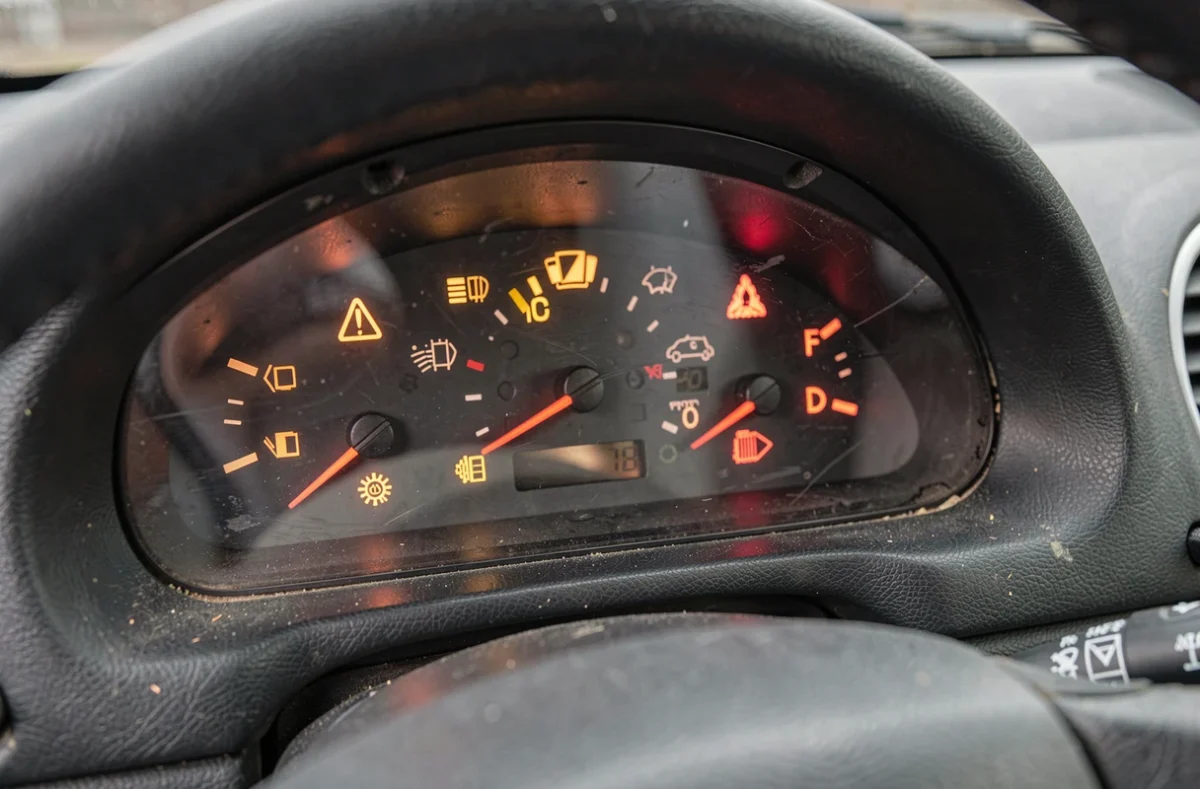
A warning light comes on in the dashboard of your Peugeot 206 and you don’t know whether to stop immediately or just plan a trip to the garage. This hesitation is normal: the 206’s dashboard has more than a dozen warning lights, each with a different level of urgency. Understanding their logic can prevent costly breakdowns and, at times, dangerous situations.
The role of the BSI in managing the warning lights of the Peugeot 206
Before detailing each symbol, it’s important to understand what controls them. On the 206, it is the intelligent service box (BSI) that centralizes electrical information and triggers the warning lights. This box receives data from sensors distributed throughout the vehicle and then decides which light to activate.
Have you ever noticed that a warning light remains on after replacing a faulty part? This is often related to the BSI. A warning light can stay illuminated until the BSI is reset with a compatible Peugeot diagnostic tool. Replacing a sensor or a probe is not always enough: the ECU retains the fault in memory.
Similarly, clearing a fault code via the OBD port does not fix the issue. If the actual cause is not corrected, the warning light reappears after a few driving cycles. This distinction between clearing a light and resolving the problem is crucial to avoid going in circles. Consulting the list of dashboard warning lights for the Peugeot 206 allows for precise identification of each symbol before proceeding further with the diagnosis.
Color code of the lights: red, orange, green
The dashboard of the 206 uses three main colors. Each indicates a distinct level of severity, and this logic applies to all Peugeot models of this generation.
Red: stop recommended
A red warning light indicates a problem that could damage the engine or compromise your safety. The STOP light, for example, illuminates in conjunction with other red lights to indicate a critical situation. A red warning light requires you to stop as soon as possible and turn off the engine.
The most common red lights on the 206 concern:
- The temperature or level of the coolant, which signals a risk of engine overheating that could lead to a breakdown
- The engine oil pressure, which indicates a serious lubrication failure when illuminated while driving
- The braking circuit, which may signal a low brake fluid level or a malfunction of the electronic brake distribution
- The battery charge, which indicates that the alternator is no longer properly recharging the electrical circuit
Orange: diagnosis needed
An orange warning light does not justify an immediate stop, but it should not be ignored for weeks. It signals a malfunction that, without intervention, can worsen. The orange engine light (often in the shape of a stylized engine block) is the most common on the 206 HDi. It generally indicates an issue related to emissions or a sensor in the pollution control system.
Green: normal operation
Green or blue lights are informational indicators. Active turn signals, headlights on, high beams: they simply confirm that a piece of equipment is functioning. No action is necessary.
ABS light and brake warning light: two alerts not to be confused
The ABS light illuminated alone does not mean that your brakes are no longer functioning. Conventional braking remains operational, but the anti-lock braking system is disabled. In practical terms, in the event of an emergency stop on wet ground, the wheels may lock up. The vehicle brakes, but without electronic assistance.
The situation becomes truly concerning when the ABS light comes on at the same time as the red brake warning light. This combination indicates a deeper problem in the hydraulic circuit or brake distribution. In this case, caution dictates driving at reduced speed to the nearest garage.

On the 206, the ABS sensor located at the wheels is a wear part. A simple dirt buildup or a damaged wire is enough to trigger the light. The OBD diagnostic quickly identifies which sensor is problematic.
Illuminated warning lights and technical inspection: what has changed
Since the technical inspection reform in May 2018, certain illuminated warning lights while the engine is running can lead to a re-inspection. The affected lights are primarily those for the engine, ABS, airbag, and braking. A persistent orange engine light, often tolerated by drivers in daily use, thus becomes a reason for refusal.
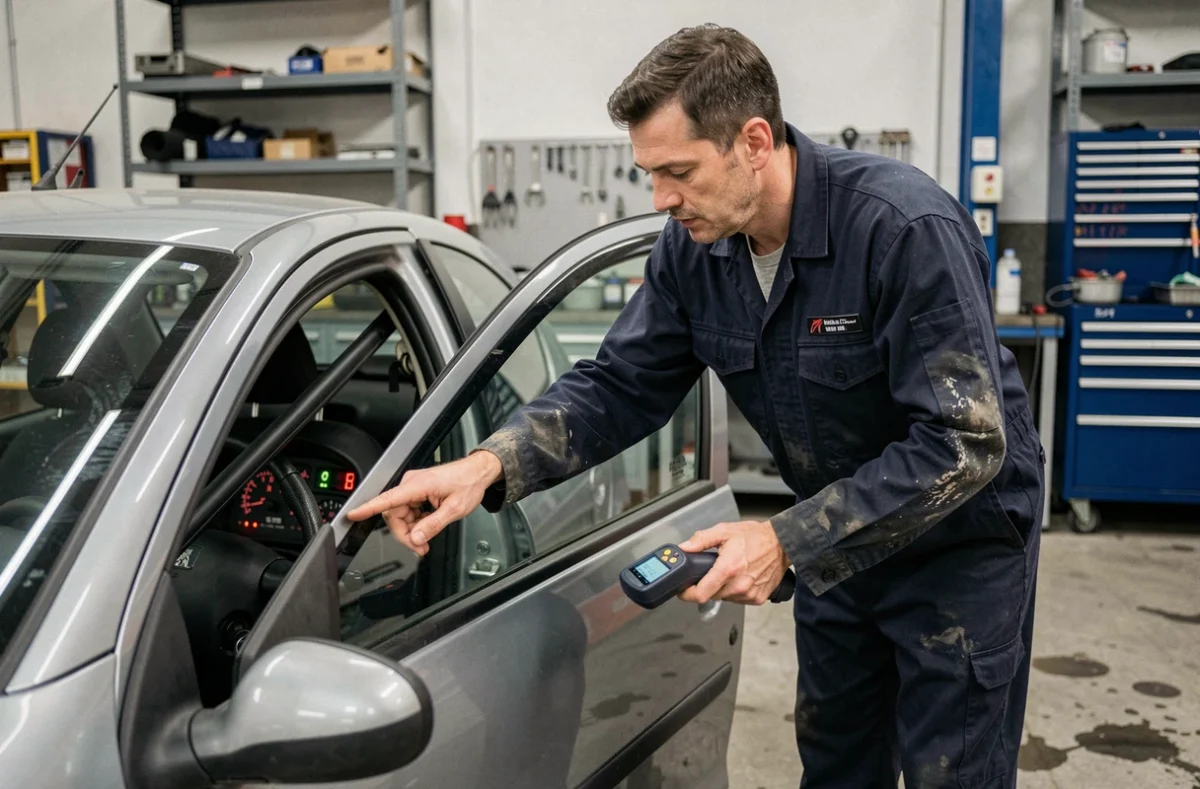
For a 206 approaching its technical inspection, it is advisable to have the fault codes read a few weeks before the scheduled date. Correcting a lambda sensor fault or a pressure sensor issue costs much less than a re-inspection followed by another visit.
Major failures classified during inspection
The inspector visually checks if any lights remain illuminated after starting the engine. They do not connect a diagnostic tool: they observe the dashboard. A fixed ABS light, a permanent airbag light, or an illuminated engine light is enough to classify a major failure.
Clearing the fault code the day before the inspection does not resolve anything. If the problem persists, the light often comes back on before even reaching the inspection center. The only reliable approach remains to address the actual cause of the fault.
The Peugeot 206 remains a vehicle whose electronics, although simpler than more recent models, require a minimum of attention. Correctly identifying the color and symbol of a warning light allows you to distinguish what can wait from a fault that requires an immediate engine stop. Regular OBD diagnostics, even preventive, remain the best way to keep a dashboard light off.