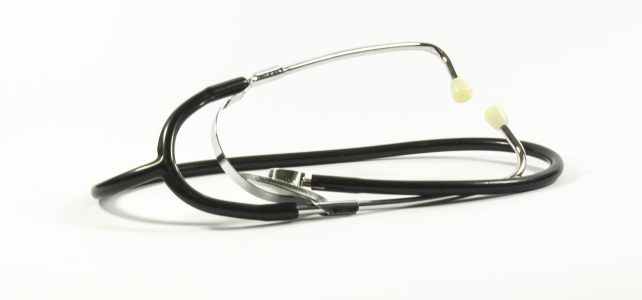
The stethoscope is an essential tool for any healthcare professional, allowing them to listen to the internal sounds of the body and make accurate diagnoses. However, knowing where and how to place this instrument can make all the difference between an ordinary auscultation and a high-quality clinical evaluation.
The Basics of Cardiopulmonary Auscultation
Cardiopulmonary auscultation is one of the most critical uses of the stethoscope, serving to assess the cardiac and pulmonary health of the patient.
- Placement at the Heart: Position the diaphragm of the stethoscope on the various precordial areas to listen to heart sounds. Key areas include the aortic, pulmonary, tricuspid, and mitral regions. This method allows for the detection of murmurs, pericardial rubs, and other cardiac abnormalities.
- Placement at the Lungs: For a pulmonary evaluation, the stethoscope should be placed on the upper, middle, and lower lobes of the lungs, on the anterior, posterior, and lateral surfaces of the thorax. This enables the identification of normal or pathological respiratory sounds such as wheezes, crackles, or rhonchi.
Advanced Techniques for Abdominal Auscultation
Abdominal auscultation is essential for assessing gastrointestinal function and detecting abnormalities such as abnormal bowel sounds or the absence of sounds.
- Abdominal Quadrants: Divide the abdomen into four quadrants – upper right, upper left, lower right, lower left – and place the stethoscope on each of them. This technique allows for listening to bowel sounds and identifying specific anomalies in each region.
- Auscultation of Abdominal Arteries: Place the stethoscope on the aortic, renal, and iliac arteries to detect vascular bruits, indicating potential stenosis or aneurysms.
Auscultation of Peripheral Vascular Sounds
Listening to peripheral vascular sounds is essential for assessing the condition of blood vessels and detecting vascular pathologies.
Carotid Arteries: Place the stethoscope on the carotid arteries, on each side of the neck, to listen for bruit sounds, which may indicate carotid stenosis. This technique is crucial for assessing the risk of stroke.
Femoral Arteries: Place the stethoscope on the femoral arteries, located in the groin, to detect vascular bruits. This auscultation can reveal arterial occlusions or femoral aneurysms.
Optimizing Placement in Children
Children present unique challenges for auscultation, requiring specialized techniques to achieve accurate results.
- Listening to Heart Sounds: In children, the heart is often positioned higher in the thorax. Place the stethoscope slightly higher and more medial, near the sternum. Congenital anomalies may be more frequent, necessitating careful listening.
- Listening to Lung Sounds: Children’s lungs are smaller, and the risk of infections is higher. Position the stethoscope on the anterior and posterior areas, ensuring that the child breathes deeply and regularly.