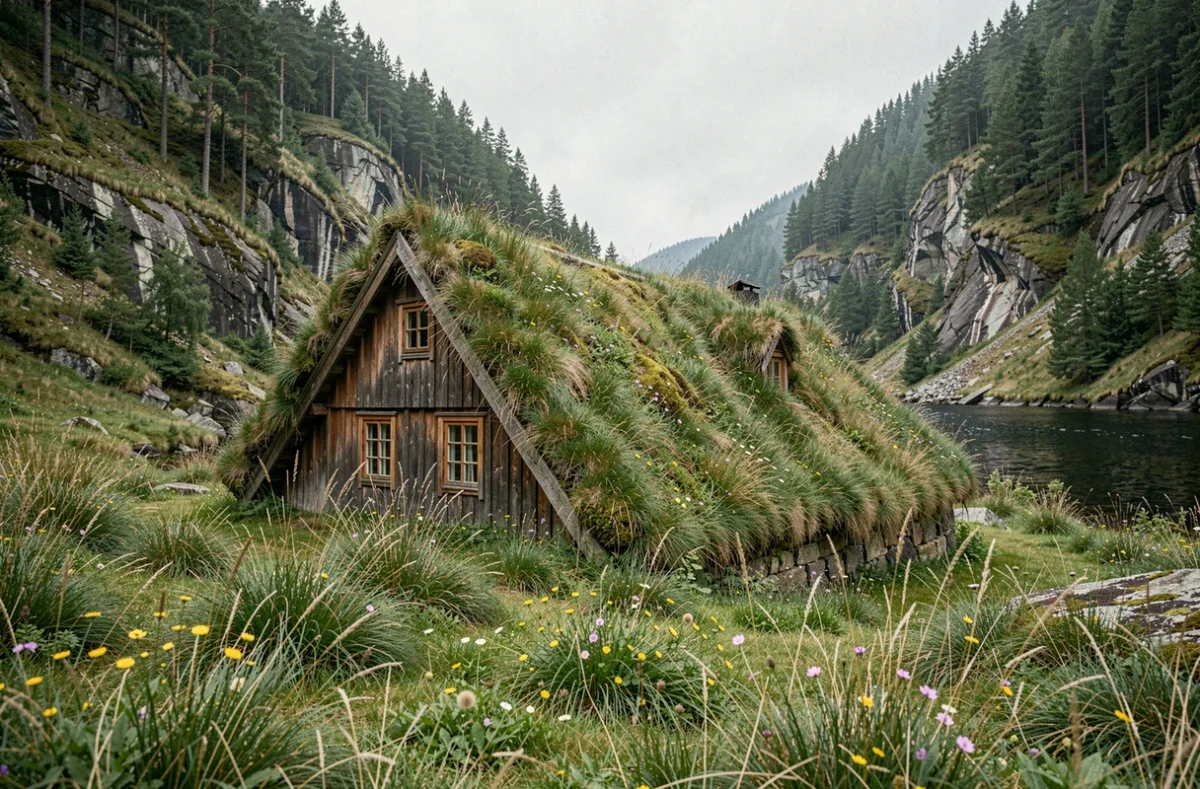
When you step onto a renovation site in Vestland or Trøndelag, the first thing that strikes you is not the landscape: it’s the layer of soil and grass covering the roofs, sometimes several dozen centimeters thick. This grass-covered roof, called torvtak in Norwegian, is far from a decorative accessory. It serves specific technical functions, and its resurgence in recent constructions addresses very real climatic constraints.
Torvtak and Rainwater Management: A Concrete Urban Challenge
Torvtak is rarely discussed as a hydraulic management tool. Competitors highlight thermal insulation or landscape integration, but the topic currently engaging Norwegian engineers is different: the capacity of green roofs to absorb intense rainfall.
The SUrbArea project, conducted from 2025 to 2027 with SINTEF, precisely evaluates the direct and indirect costs of flooding in urban environments. Green roofs are studied as a water-retention infrastructure, alongside the reopening of waterways and permeable ground coverings.
SINTEF notes that episodes of intense rainfall are increasing alongside urbanization. The houses with grass roofs in Norway are therefore no longer just a heritage legacy, but an active element in the country’s climate adaptation strategy.
Thermal Insulation of the Grass Roof: What the Vegetative Layer Really Changes
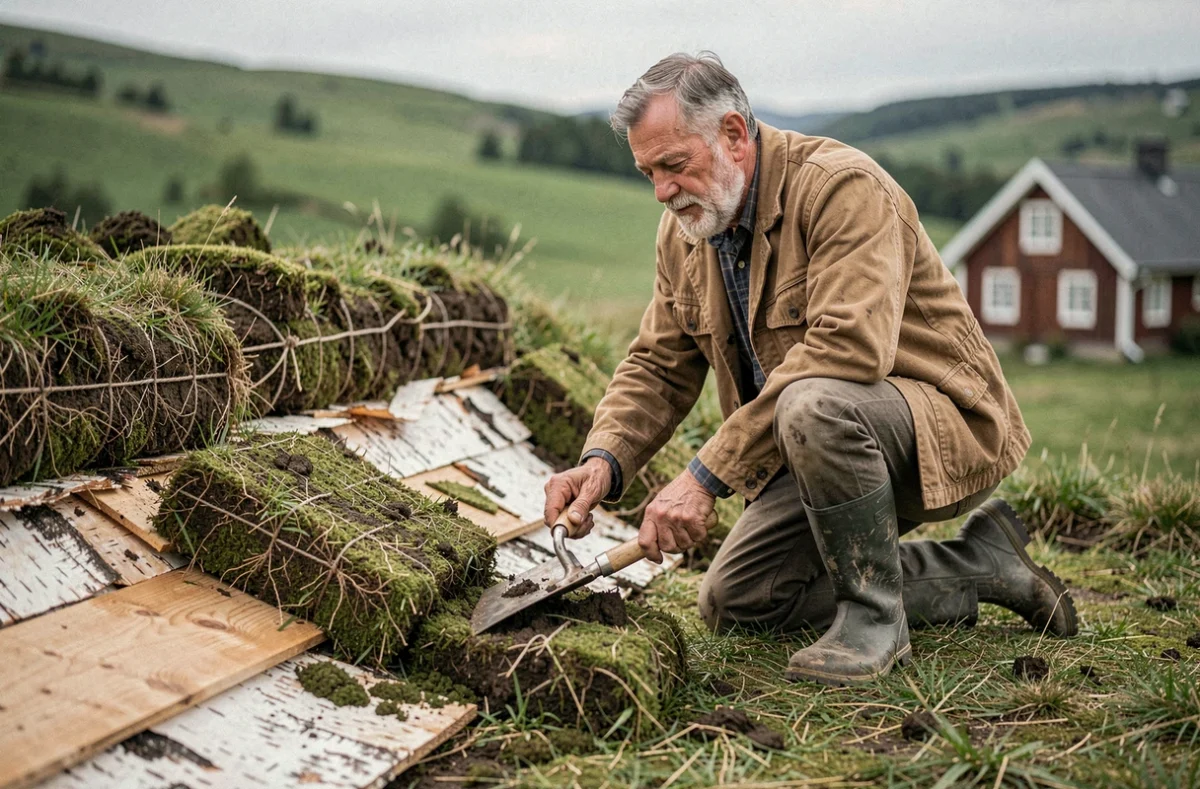
On the ground, it is observed that the soil and vegetation create a thermal buffer that works both ways. In winter, the substrate layer limits heat loss through the roof. In summer, it absorbs solar radiation instead of reflecting it back into the building.
This mechanism has been known since the Viking Age, when most rural houses already used birch bark under a layer of grass. The difference today lies in the modern waterproofing materials placed beneath the substrate, which eliminate the main historical flaw of the torvtak: water infiltration.
The combination of birch bark and modern membrane allows for the preservation of the ancestral bioclimatic principle while ensuring the waterproofing required by contemporary standards. Feedback varies on this point depending on the thickness of the substrate and the exposure of the slope, but the principle remains the same for the majority of installations.
Extensive or Intensive Green Roof: Choosing Based on the Supporting Structure
Not all torvtak are alike. The distinction between extensive and intensive has direct consequences on the framework and budget.
- The extensive green roof uses a thin substrate layer, with mosses, sedums, and grasses. It is suitable for large surfaces and lightweight structures, as the load remains moderate.
- The semi-intensive roof accepts a thicker layer and more varied vegetation. It requires a reinforced framework and regular maintenance (weeding, drainage checks).
- The intensive roof resembles a true rooftop garden, with shrubs and sometimes small trees. The load carried is significant and the structure must be designed from the outset.
In Norway, mountain cabins and country houses predominantly opt for the extensive type, which replicates the tradition of the torvtak without overloading wooden frameworks. Urban projects, on the other hand, are leaning towards semi-intensive to increase water retention and biodiversity in the city.
Economic Valuation and Residents’ Willingness to Pay
One aspect rarely discussed: how much are people willing to pay to live near green roofs? The SUrbArea project includes citizen surveys aimed at measuring this “willingness to pay.” The idea is to assess what populations attribute as value to security against flooding, environmental quality, and recreational opportunities offered by nature-based solutions.
The economic evaluation goes beyond the simple installation cost. It now includes non-market effects: perceived safety, visual appeal, contribution to local biodiversity. This approach changes how Norwegian municipalities arbitrate their investments in green infrastructure.
For individuals considering a grass roof, this trend translates into increasing support from municipal policies. Renovation projects incorporating a green roof receive favorable attention in the Nordic countries, where sustainable rainwater management has become a planning priority.
Grass Roof: Maintenance and Practical Constraints to Anticipate
It would be a mistake to think that a grass roof requires no follow-up. Maintenance depends on the type of vegetation chosen, but a few operations are consistently necessary.
- Check the drainage system at least once a year, especially after the snow melts, to avoid stagnant water accumulation.
- Monitor for the appearance of unwanted vegetation (young tree shoots, invasive species) that could damage the waterproof membrane with its roots.
- Inspect the edges and connections with roofing elements (chimneys, dormers), areas where infiltrations most often occur.
- Monitor snow load in winter, as the combined weight of the wet substrate and snow can put significant strain on the framework.
These interventions do not represent a considerable effort for a single-family home, but they must be planned. Neglecting drainage for several seasons can lead to costly repairs on the wooden structure.
The torvtak is not a default choice. It is a technical solution that responds to a specific climate, measurable urban challenges, and a constructive tradition that Norway has never completely abandoned. The fact that SINTEF is now dedicating research programs to it confirms that these grass roofs have changed status: they are no longer folklore, but climate engineering.