Real estate listings are filled with abbreviations like F1, F2, or F3, often used interchangeably with T1, T2, or T3. These terms refer to the number of main rooms in a property, but their common usage masks subtleties that can lead to confusion when searching for a rental or purchase.
The surface area threshold that changes the game in counting rooms

Most guides simply explain that the number after the letter F corresponds to the number of main rooms. What is rarely detailed is the direct impact of surface area on this count.
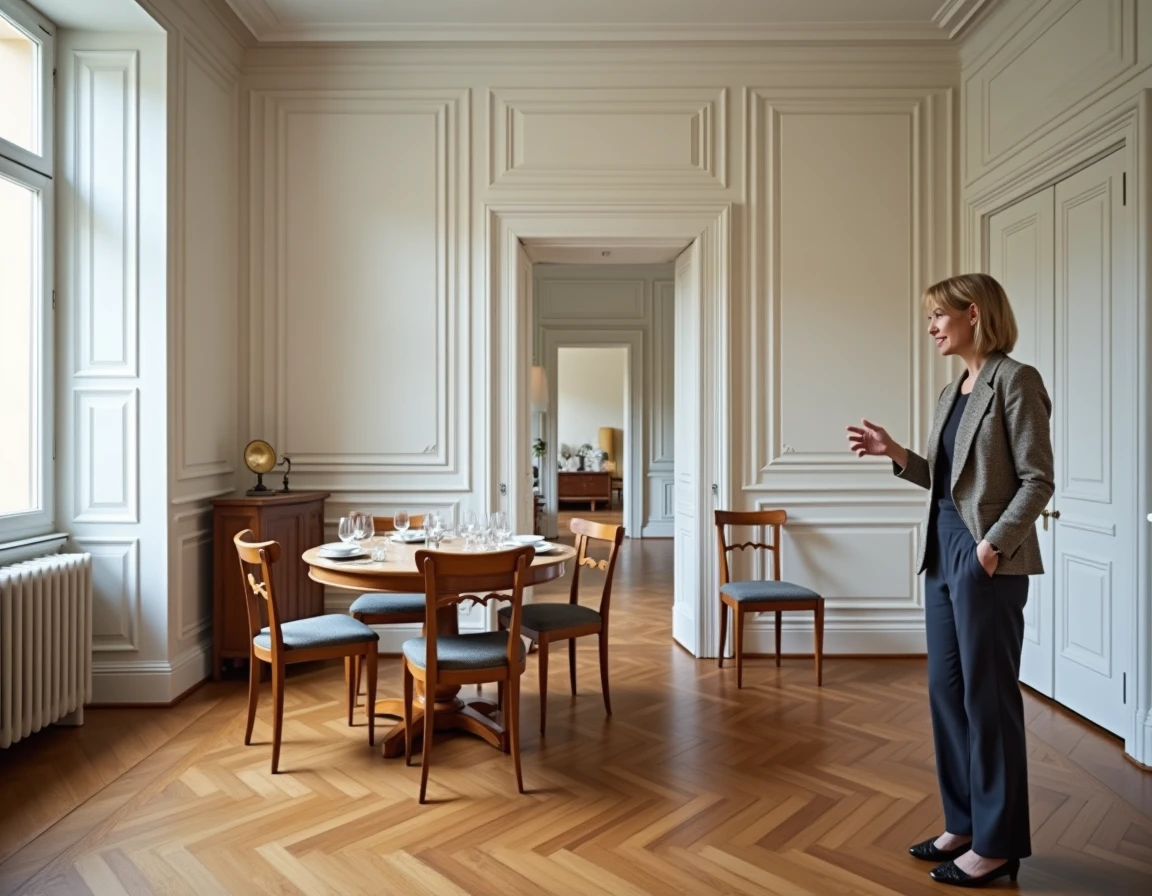
For a room to be counted as a main room, it must measure at least 9 m2 with a height of 2.20 m. Below this threshold, it does not count, even if it is used as a bedroom on a daily basis. A property sold as F2 with a second room of 8 m2 therefore poses a classification problem.
Conversely, a room whose area exceeds 30 m2 can be counted as two rooms. An apartment consisting of a large living room of over 30 m2 and a bedroom could thus be classified as F3 rather than F2. This rule explains some listings that seem inconsistent at first glance. To fully understand what an F1 F2 F3 apartment means, it is essential to keep in mind that the area of each room weighs as much as their raw number.
F1 and studio: a confusion that skews real estate searches
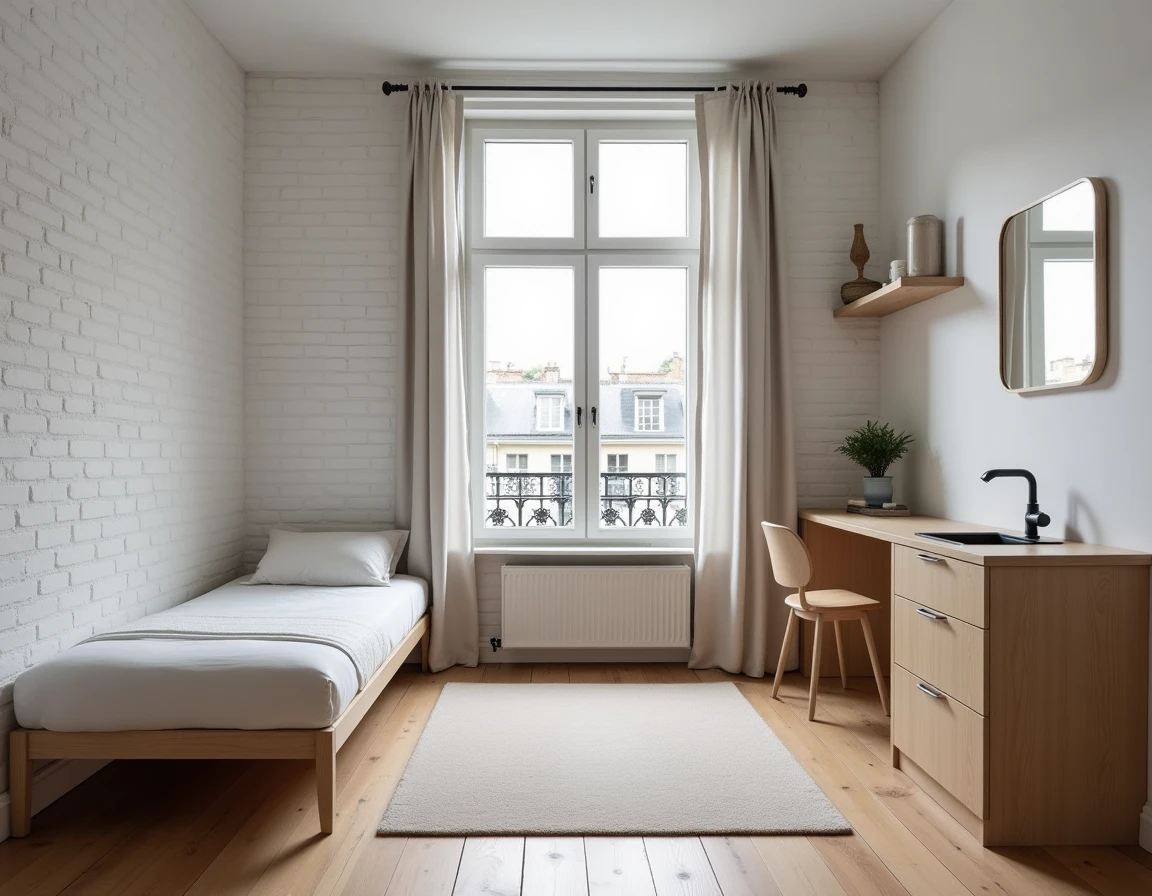
In listings, F1 and studio often appear as synonyms. Both refer to compact living spaces, but their difference lies in one specific point: a separate kitchen distinguishes F1 from a studio.
A studio consists of a single room that combines living space, sleeping area, and kitchen corner. The bathroom is the only closed room. An F1, on the other hand, has a main room and an independent, physically separated kitchen.
This distinction has concrete implications for the price per square meter and user comfort. An F1 with a separate kitchen offers better ventilation of odors and a clearer organization of space. In the rental market, both are often offered in the same rental price range, while the F1 provides an additional closed room.
The case of F1 bis
Some listings mention an F1 bis. This term, which does not have a strict regulatory definition, generally refers to an F1 whose main room is large enough to be visually divided into two spaces (living area and sleeping area), without a complete partition. The suffix “bis” indicates an intermediate space between two categories, not a fully separate additional room.
F2 and F3: what the number includes and what it excludes
An F2 has two main rooms, typically a living room and a bedroom. An F3 has three, most often a living room and two bedrooms. In both cases, the kitchen, bathroom, and toilets are never counted in the number.
This exclusion rule is the source of frequent misunderstandings. An F3 does not contain three rooms in total, but three living rooms in addition to the water rooms and kitchen. An F3 actually counts as five or six rooms if all closed spaces are added together.
- F2: one living room, one bedroom, plus kitchen and bathroom (not counted)
- F3: one living room, two bedrooms, plus kitchen and bathroom (not counted)
- F4 and beyond: the same principle applies, each number adding an additional main room
The letters F, T, and P are interchangeable in common usage. An F3 is identical to a T3 or a P3. The letter F historically refers to “function,” T to “type,” and P to “room,” but none of these letters alters the actual composition of the property.
Duplex, souplex, and lofts: when the F1-F2-F3 nomenclature reaches its limits
Real estate agents continue to use the abbreviations F1, F2, or F3 for property types that do not always fit this framework. A duplex classified as F3 may have a large open space on the ground floor and two bedrooms upstairs, but the distribution of volumes makes comparison with a classic F3 less relevant.
Lofts present a similar problem. An 80 m2 completely open space may sometimes be listed as F1, sometimes as F2 if a mezzanine serves as a bedroom. The commercial use of abbreviations remains more flexible than theoretical definitions, making a physical visit to the property essential to verify the actual configuration.
Souplex (apartments with a basement level) add a layer of complexity. The basement room is not always counted as a main room if it lacks natural light or if its ceiling height is insufficient, even when the listing presents it as a fully separate bedroom.
Reading a real estate listing: checks to avoid mistakes
The abbreviation alone is not enough to evaluate a property. Two F3s can have very different total areas and layouts that have nothing in common.
- Check the area of each main room: a bedroom of less than 9 m2 should not be counted
- Distinguish between living area and floor area, especially in attic properties where height reduces usable space
- Confirm that the kitchen is indeed separate if the property is presented as F1 rather than studio
- Request a detailed plan for duplexes, lofts, or souplexes where the room count may vary depending on interpretation
The number after the letter F remains a starting indicator, not a guarantee of configuration. The total area, ceiling height, and actual layout of the property matter as much as the number of rooms displayed in the listing. In a market where property types are diversifying, cross-referencing the abbreviation with a detailed plan remains the most reliable method to avoid unpleasant surprises.