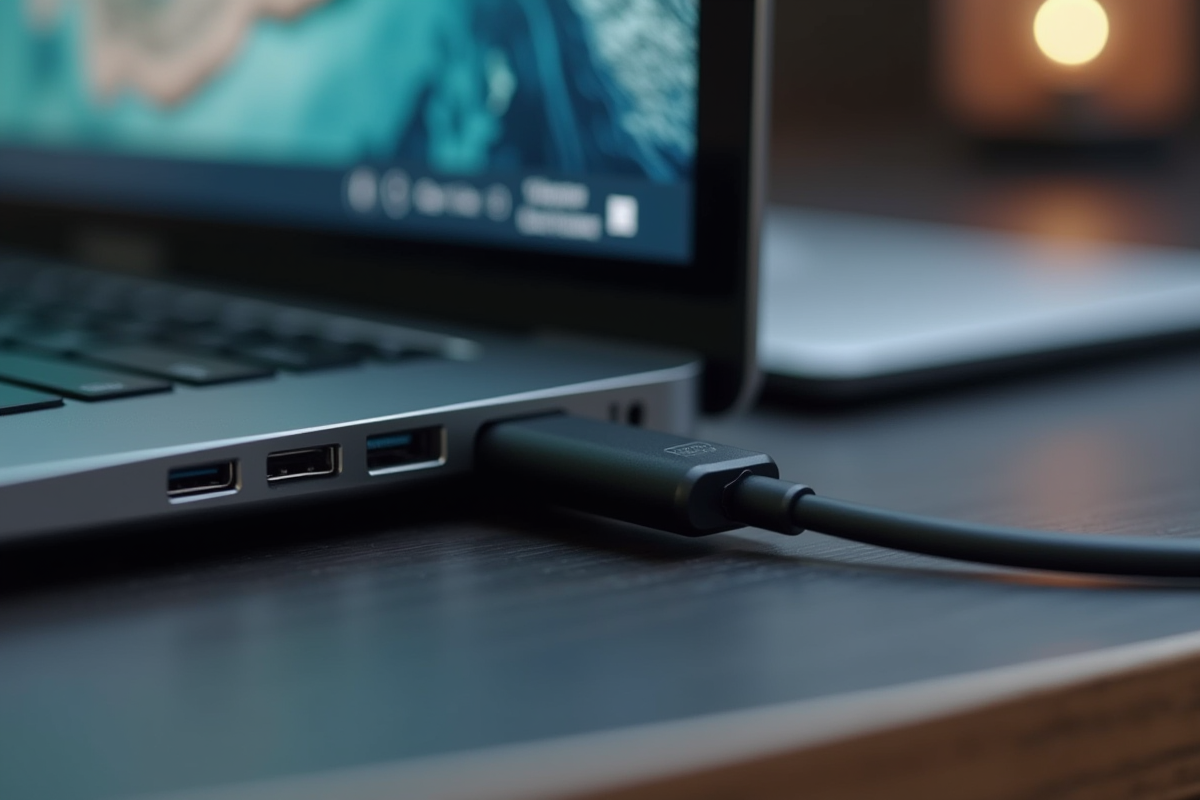
Computer accessories, although often overlooked, play a fundamental role in our digital daily lives. Among them, the USB dongle stands out for its versatility and usefulness. This compact object, seemingly innocuous at first glance, can transform a computer by adding additional functionalities such as wireless connectivity, access to secure networks, or even increasing storage memory.
The options are varied, ranging from Bluetooth adapters to security keys for protecting personal data. For many, the USB dongle remains a mystery. Yet, understanding how it works can greatly enhance the user experience and optimize the use of our technological devices.
What is a USB dongle and what is it used for?
Understanding the USB dongle requires knowing its multiple functions and uses. A dongle, in simple terms, is a small device connected to a computer via a USB port. It allows for the addition of features or additional security measures. Often unknown, the dongle can prove indispensable in various computing contexts.
- Authentication: Dongles are frequently used to verify user identities. They play a fundamental role in security processes by ensuring that only authorized users access sensitive systems or data.
- Software Protection: These devices prevent unauthorized copying of software, ensuring that applications only function in the presence of the appropriate dongle. This method, known as digital rights management, protects the rights of software creators.
- Connectivity: USB dongles are also used to connect wireless devices to a computer, such as keyboards, mice, or Bluetooth headphones. By using such a dongle, one can transform a computer lacking wireless connectivity into a machine compatible with modern peripherals.
The origins of the term ‘dongle’ remain unclear, although Oxford University Press is an academic reference for it. A definition dongle could be seen as a technological translation tool, facilitating interconnection between different devices and software. These lightweight and compact devices are true pillars in the digital ecosystem, offering essential security and connectivity solutions. 
The different types of USB dongles and their uses
USB dongles are not all created equal. They come in several types, each with specific functionalities, addressing various needs.
- Security Keys: These dongles are essential for protecting software and authenticating users. Among the most well-known, the HASP security key protects against software piracy by preventing use without the physical key. The HASP Sentinel goes further by enhancing security through binary code exchange.
- Advanced Security Keys: The SafeNet eToken 5110 and the CodeMeter CmStick are examples of devices used for multifactor authentication and digital rights management. These keys are crucial for companies looking to secure access to their IT systems.
- Biometric Security Keys: The Kensington security key features a fingerprint reader as well as a U2F (Universal 2nd Factor) functionality, providing a double layer of protection for security-conscious users.
- Bluetooth Dongles: These adapters allow for the connection of wireless peripherals, such as keyboards, mice, or headphones, to computers lacking native Bluetooth connectivity.
This diversity of USB dongles demonstrates their versatility and central role in the digital ecosystem. Whether it’s to protect software, authenticate users, or connect peripherals, each type of dongle meets specific needs, making these devices indispensable in many computing contexts.