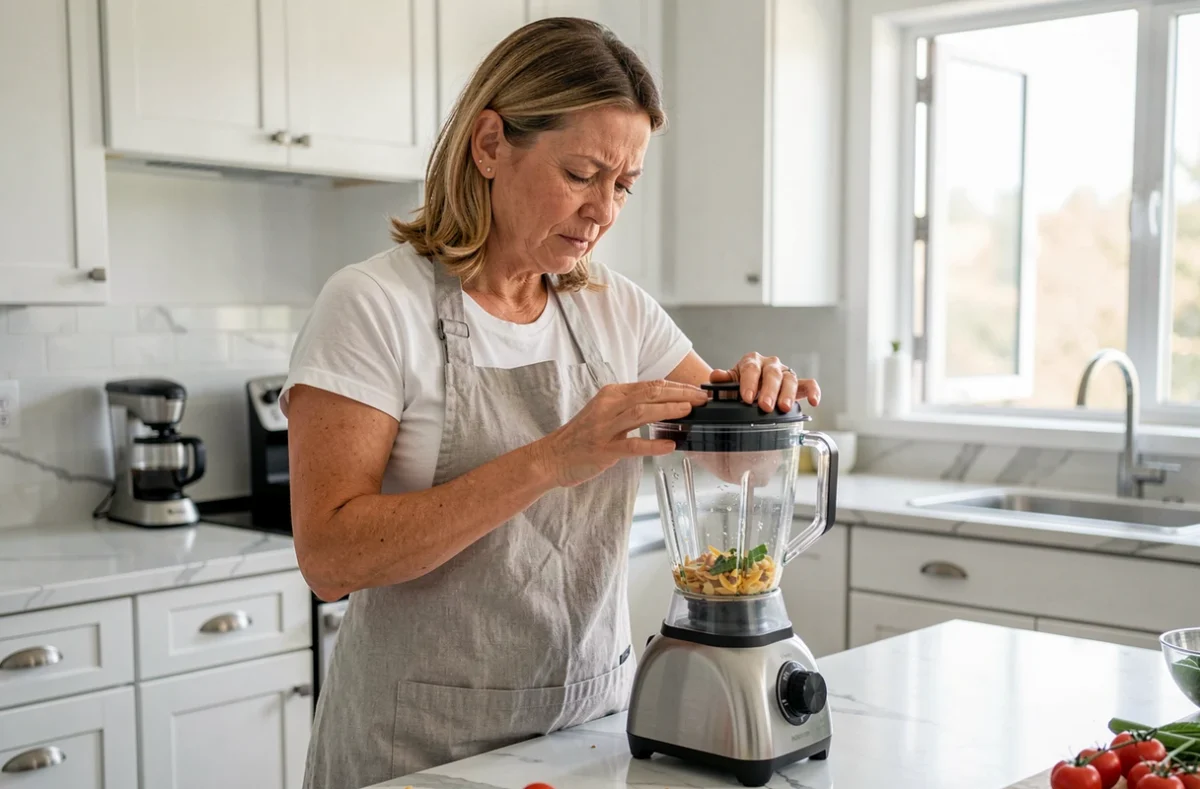
We start a soup program, the liquid heats up normally, but the blades remain still. The heating blender hums, the heating element does its job, and yet nothing happens on the mixing side. Before concluding a definitive breakdown, several simple checks can help identify the cause and, in most cases, get the device back in service without going through a repair technician.
Safety lock and bowl detection: the invisible fault
The majority of heating blenders incorporate a locking system that prevents the motor from turning if the bowl is not properly positioned. On Moulinex, Philips, or Russell Hobbs models, a magnetic or mechanical sensor detects the alignment of the bowl on the base. If this sensor does not receive the correct signal, the mixing motor does not start, even if the heating works.
This situation often occurs after cleaning: the bowl has been slightly misaligned, or the lid seal has slipped. On some Daily Soup models, simply removing the bowl, cleaning the contacts on the base with a dry cloth, and then repositioning everything by turning until it clicks is often enough. If the lid has a rotary lock, it must be fully engaged.
When faced with a problem of a heating blender that no longer mixes, this safety system is the first avenue to explore, as it does not generate any error messages on most entry-level and mid-range devices.
Stuck or worn blades: diagnosis without complete disassembly
Before touching the motor, we check the condition of the blades. Mechanical blockage is the second most common cause.
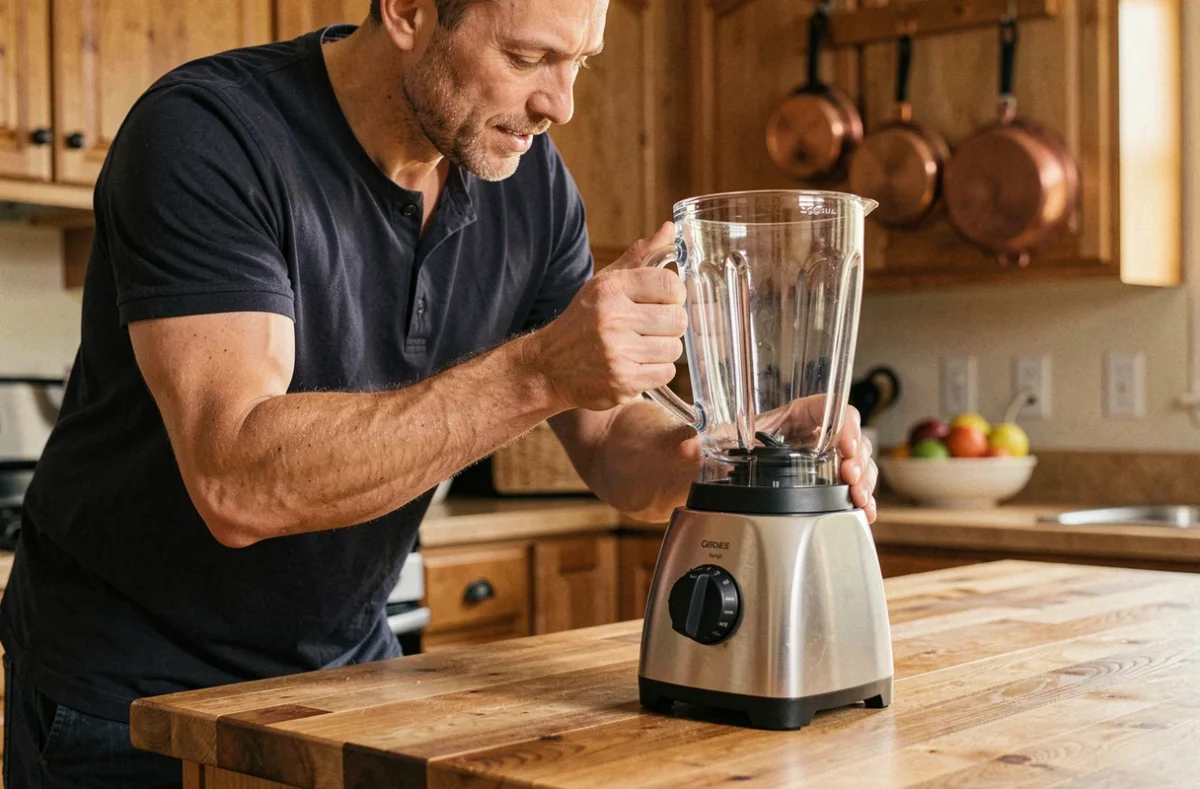
We start with a simple test: with the bowl removed from the base, we turn the blade unit by hand (device unplugged). If the rotation is difficult or impossible, the problem lies there. Several common situations explain this blockage:
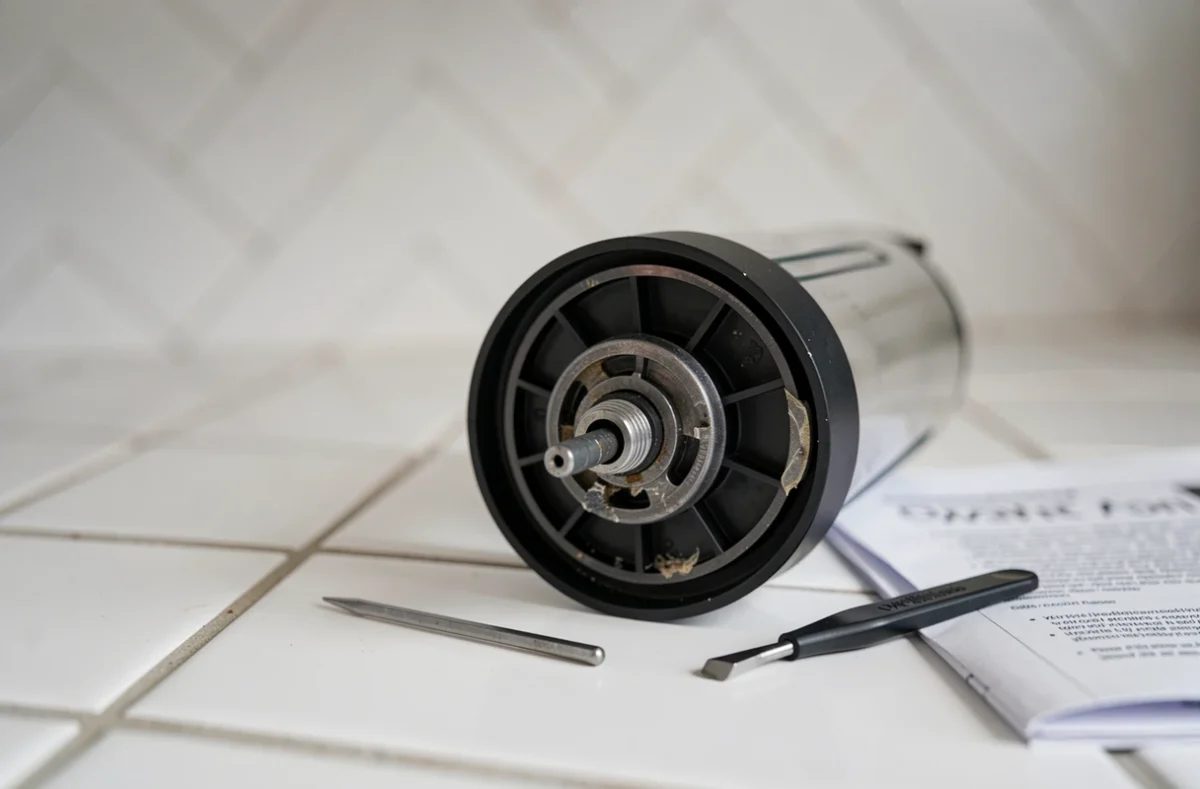
- Dried food residues have accumulated under the blade base, between the seal and the shaft. Soaking the blade unit in hot water with dish soap for about twenty minutes is often enough to free the mechanism.
- The internal bearing of the shaft is stuck. With regular use, cleaning water eventually removes the grease from the bearing. The shaft turns poorly, the motor strains, and then the thermal protection cuts off the mixing.
- The blades are dull to the point of no longer moving the food. This is noticed when the motor runs but the pieces remain intact in the bowl, even with liquid. In this case, replacing the blade unit is the only lasting solution.
Replacement blade units can be easily found online by searching for the exact model reference. This can be found on the label under the base of the device.
Thermal protection and fuse: when the motor heats up but refuses to turn
The heating blender is a device that combines two heat sources: the heating element and the motor. To protect the latter, a thermal fuse cuts off the power to the motor in case of overheating. This fuse typically triggers when mixing a load that is too thick without liquid, or when running several cycles in a row without a break.
On some models, the protection is resettable: simply unplug the device, wait about twenty minutes, and then retest a short cycle. If mixing resumes, it was a temporary trigger. It is advisable to avoid immediately restarting a long program.
However, a burnt smell or abnormal heating of the base indicates a more serious problem. In this case, do not attempt to restart. Unplug, let it cool completely, and contact customer service. Opening the base yourself to test the fuse is technically possible (as seen on forums), but feedback varies on this point: without a multimeter and precise circuit identification, one risks mainly voiding the warranty.
Legal warranty and recourse before repair: what forums don’t say
Forums almost systematically direct towards purchasing spare parts or disassembly. It is often forgotten that the legal warranty of conformity covers operational defects without the condition of purchasing additional parts. It is the seller, not the manufacturer, who is the responsible contact.
In practical terms, if the heating blender no longer mixes while being used under normal conditions, one can request a repair or replacement from the point of sale. The page dedicated to the legal warranty of conformity on Service-Public.fr details the process to follow.
This recourse is relevant before any attempt at home repair, as disassembling the base (even partially) can be interpreted as an unauthorized intervention and may void the warranty.
Preventive maintenance of the heating blender to avoid mixing failure
Some habits significantly reduce the risk of encountering a blocked mixer:
- Never start a mixing cycle empty or with only solid foods. Always add a minimum amount of liquid before mixing, even in soup mode.
- Clean the blade unit after each use by running it for a few seconds with warm water and a drop of dish soap, rather than letting it soak for hours in the sink.
- Dry the base of the bowl and the contacts on the base before storing the device. Residual moisture accelerates bearing wear and contact oxidation.
- Respect the maximum quantity indicated in the bowl. Overfilling strains the motor and unnecessarily engages the thermal protection.
A heating blender with freely rotating blades, clean contacts, and a motor that is not consistently pushed to its maximum load has every chance of functioning for several years without mixing failure. The reflex to check the locking and the condition of the blades before considering a replacement helps avoid unnecessary purchases in most cases.