
A house construction project involves a series of technical checks long before the first stone is laid. Property surveys are among them, and they do more than support a transaction: they affect whether the project is feasible, protect the safety of everyone on site and ensure the completed building complies with regulations. Understanding how these checks fit into the design and construction phases helps prevent costly delays along the way.
Soil surveys and clay shrink-swell: a diagnosis the design process cannot ignore
Soil surveys are often seen as an insurance formality. In reality, they determine the foundation design and, in turn, the long-term stability of the entire structure.
In areas with medium or high exposure to clay shrink-swell, the law requires a geotechnical survey when the land is sold, followed by a further survey during the construction phase. These requirements ensure that the design accounts for ground movement, which can cause structural cracks in a new home within just a few years.
The connection between property surveys and house construction is especially clear here: without a soil survey, the choice of foundation type (strip footings, raft foundation or micropiles) is based on assumptions rather than measured data. The geotechnical engineer assesses the soil type, its bearing capacity, the presence of water and the risk of swelling. These findings directly inform the work of the structural engineering firm.
One little-known point: failing to carry out a soil survey does not automatically lead to a refusal of structural damage insurance, but it significantly weakens the owner’s position if a claim arises. The insurer may argue that reasonable precautions were not taken and challenge the claim.
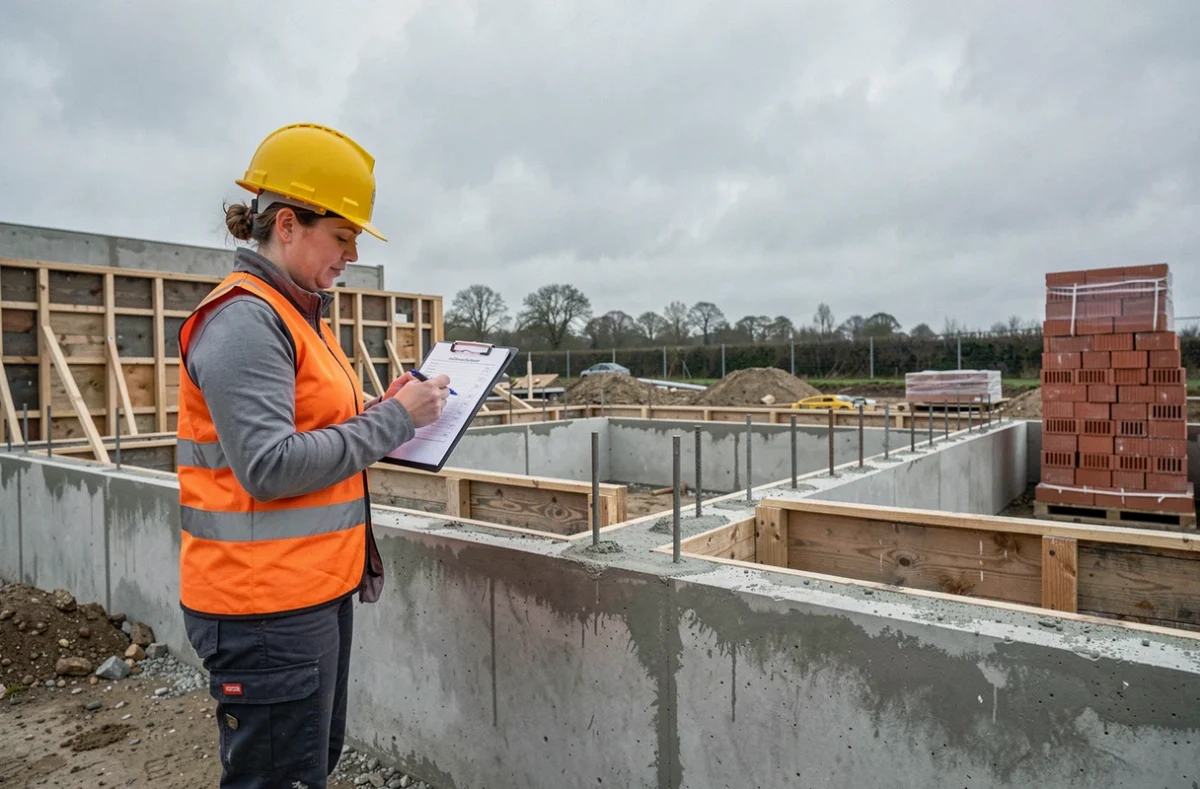
Pre-construction surveys: asbestos, lead and termites on a developed site
Building a new home on land already occupied by an older building significantly changes the scope of the required surveys. Before any demolition or major renovation, an asbestos survey before work begins (RAT) is required for buildings with a building permit dated before July 1997.
This survey is not the same as the standard asbestos survey carried out during a sale. The RAT specifically identifies materials that will be disturbed by the work: sprayed coatings, insulation, floor tiles, pipes and joints. The decree of 16 July 2019 defines six survey programmes according to the type of operation, requiring the certified surveyor to tailor the inspection to the exact nature of the planned work.
A lead survey completes this process for buildings constructed before 1949, while a termite survey is required in areas covered by a prefectural order. These three surveys protect workers and may expose the client to criminal liability if requirements are not met.
What the client should check themselves
- The surveyor must hold a valid certification for each type of survey (asbestos, lead and termites), issued by a body accredited by Cofrac.
- The asbestos survey report must explicitly state which of the six programmes defined by the 2019 decree applies, rather than simply providing a generic diagnosis.
- The survey findings must be provided to every company working on site before work begins, not after the quote has been signed.
Structural damage insurance and ten-year liability certificates: securing the project before work begins
Structural damage insurance must be taken out before work begins on site. This insurance quickly funds repairs for damage covered by the ten-year liability warranty, without waiting for a court to determine liability among the various parties involved. For anyone having a home built, this cover can prevent years of legal proceedings in the event of a serious construction defect.
For contractors, checking ten-year liability insurance certificates involves more than simply asking for a document. Three points deserve careful attention:
- The company named on the certificate must match the company listed on the signed quote (the legal name and SIREN number must be identical).
- The insurance must be valid on the actual date work begins on site, not just on the date of the quote.
- The activities covered by the policy must correspond precisely to the work being carried out (ten-year liability insurance for masonry does not automatically cover waterproofing).
A discrepancy on any of these points may make the ten-year warranty unenforceable. Every party working on site must be checked individually, including subcontractors.

Project handover: the milestone that starts all statutory warranty periods
Handover is more than simply handing over the keys. It is a legal act that starts the periods for all three statutory warranties: the one-year defects liability warranty, the two-year warranty for equipment and the ten-year structural warranty.
The handover report records the condition of the completed building. Any construction defects, finishing issues or departures from the contract must be listed as outstanding items. Defects not recorded in this document can be harder to claim for later.
In practice, it helps to prepare for the handover inspection with a room-by-room checklist: the condition of finishes, operation of doors and windows, compliance of electrical and plumbing installations, and drainage gradients. Keeping the signed handover report together with all technical documents (construction drawings, equipment manuals and survey reports) provides a reference file in case of a future dispute.
The date recorded on the handover report is the one that counts legally. Delaying handover to avoid listing outstanding items does not protect the client; on the contrary, it postpones the start of the warranty periods without resolving the defects identified.