
The year 2024 has reshaped several front lines in the technology sector. With the enforcement of the European regulation on artificial intelligence, the arrival of a new generation of personal computers equipped with dedicated chips, and the evolution of home interfaces, announcements have come in quick succession. The emerging landscape is not limited to generative AI, even though it remains omnipresent.
AI PC: the dedicated chip that redefines the personal computer
The least covered trend in the usual CES or tech show reports concerns an everyday object: the PC. Microsoft, Intel, and Qualcomm have converged on the same concept, that of the AI PC, a computer equipped with a neural processing unit (NPU) capable of executing artificial intelligence tasks locally, without relying on the cloud.
Microsoft formalized this direction at its Surface event in March 2024, and again at the Build 2024 conference, presenting this shift as a new standard. Intel had initiated the movement at the end of 2023 with the Meteor Lake architecture, integrating an NPU directly into the processor. The first consumer models began to arrive in the spring of 2024.
Local AI reduces dependence on the cloud and data privacy concerns. A copilot running on the machine processes files without sending them to a remote server. For businesses, this changes the game in terms of security.
Field feedback varies: some analysts believe that the power of current NPUs remains insufficient for heavy models, while others see it as the foundation for massive adoption by 2025.
The tech innovations covered on smartmag.fr illustrate this acceleration of consumer hardware towards embedded AI uses.
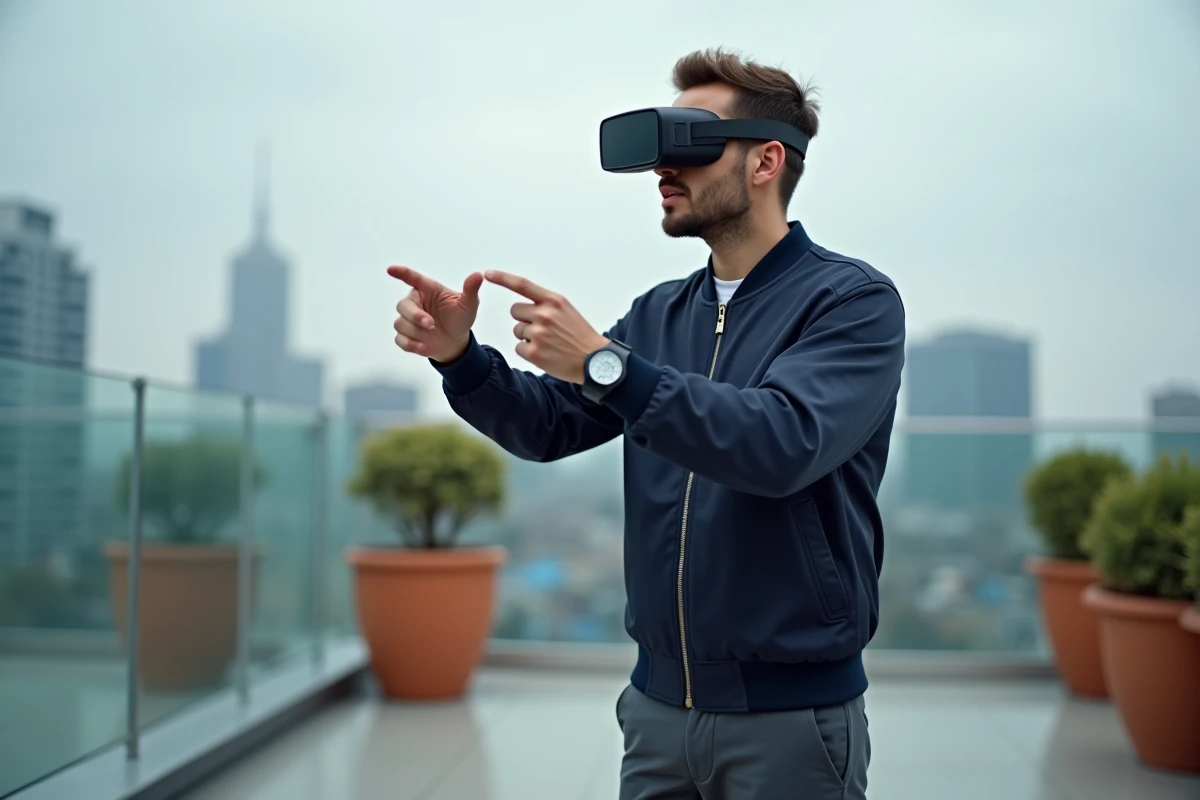
Screenless interfaces and contextual AI assistants in the connected home
The smart home of 2024 no longer resembles that of previous years. Amazon presented a deep overhaul of Alexa, powered by generative AI, as early as September 2023, with a gradual rollout throughout 2024. Google followed at the I/O 2024 conference by integrating its Gemini model into the smart home ecosystem.
The fundamental change can be summed up in one sentence: the main interface of the connected home is shifting from the screen to voice and gesture. Connected speakers are becoming assistants capable of understanding the context of a room, anticipating requests, and controlling IoT devices without needing to pull out a phone.
This shift raises concrete questions:
- Contextual voice recognition works better in English than in French, which hinders adoption in French-speaking households.
- The lack of a screen makes action confirmations less visible, with a risk of errors on sensitive smart home commands (heating, locks).
- The constant collection of voice data by these AI assistants conflicts with the strengthened European regulatory framework in 2024.
European regulation on artificial intelligence: what changes concretely
The European AI Act, adopted in 2024, constitutes the first comprehensive legal framework dedicated to regulating artificial intelligence. It classifies AI systems by risk levels and imposes obligations of transparency, auditing, and technical documentation on developers as well as user companies.
High-risk applications must now undergo a compliance assessment before being marketed in Europe. This applies to areas as varied as automated recruitment, credit scoring, or biometric surveillance. Generative AI models, including those integrated into consumer products, are subject to transparency requirements regarding training data.
For tech companies, this regulation requires investment in documentation and governance of deployed systems. Start-ups developing AI applications for the European market must integrate these constraints from the design phase, which alters development cycles.
Impact on innovation and launch timelines
Several players have postponed planned launches in 2024 to comply with the new requirements. The regulation creates a filtering effect on the innovations that reach the European market. On the other hand, it also offers a competitive advantage to companies that can demonstrate their compliance, in a context where user trust becomes a key selection criterion.

Transparent screens and immersive reality: beyond the CES showcase
CES 2024 showcased several prototypes of transparent screens, particularly from Korean manufacturers. These panels allow information to be displayed while still showing what is behind them, with applications envisioned in retail, automotive, and interior architecture.
The technology remains costly, and the consumer use cases are still limited. The available data does not allow for conclusions about a timeline for democratization. Transparent screens currently belong more to the realm of technological showcase than to mass-market products.
On the side of augmented reality and immersive technologies, the market continues to grow, but field feedback varies on the speed of adoption by the general public. Headsets remain heavy, expensive, and native content still lacks diversity. The development of mixed reality largely depends on the creation of suitable content and the reduction of hardware prices.
Ultimately, the year 2024 will have laid the foundations for a more regulated tech ecosystem, more localized in its AI processing, and more ambitious in its interfaces. The promises of CES will need to withstand the test of the real market, where price, compatibility, and regulatory compliance weigh as heavily as technical prowess.