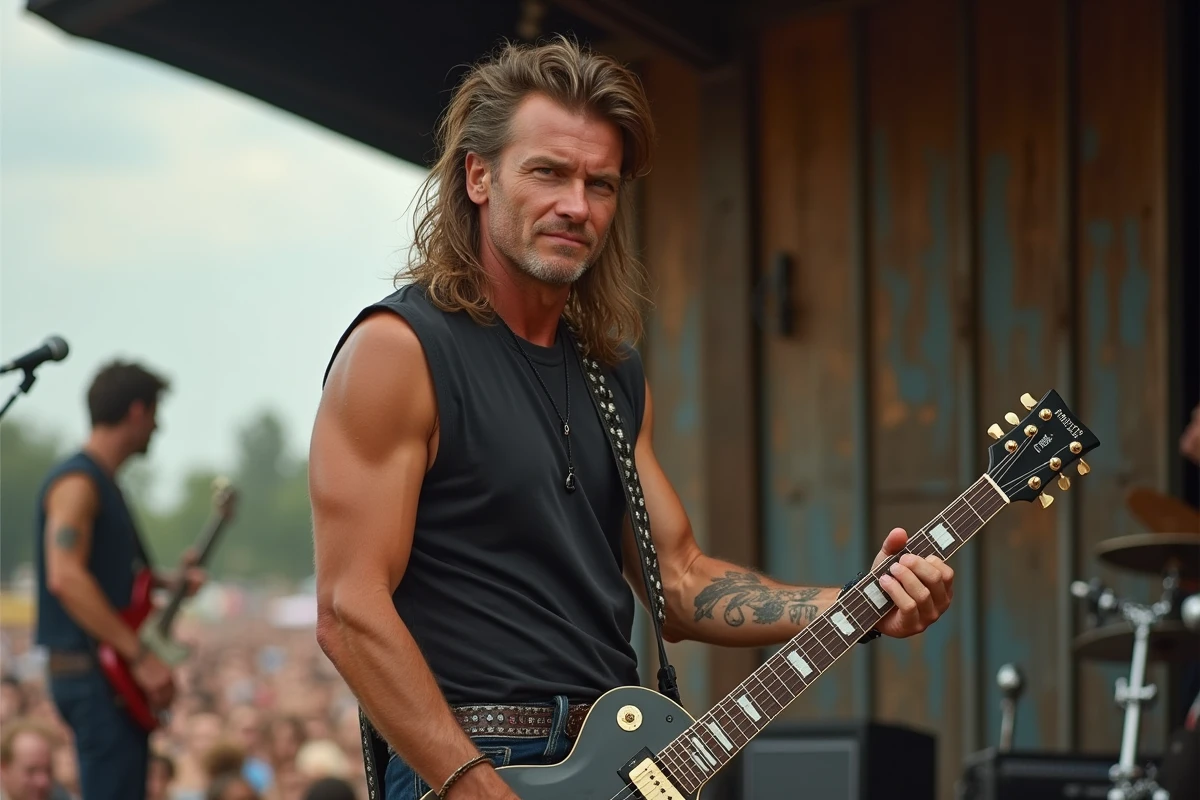
When looking for a haircut that works on thick or wavy hair, most celebrity galleries featuring mullets only show smooth, blonde locks. The problem is that the mullet is worn very differently depending on hair texture.
Several singers and actors with mullet hairstyles have proven that this haircut suits many more profiles than one might think, as long as one understands how it has evolved since the 1980s.
Mullet on curly or frizzy hair: a use case that tops ignore
The majority of celebrity mullet rankings feature profiles with straight hair. David Bowie, Mel Gibson, Patrick Swayze: the back section falls straight, and the gradient is sharp. On the ground, in hair salons, the demand has changed.
Hybrid textured mullet variants respond to a simple constraint: on curly or frizzy hair, the back length does not fall in the same way. It creates volume, sometimes resulting in a natural bob effect at the back. This is referred to as a mullet-bob, a silhouette where the back rounds out instead of falling flat.
This type of cut requires a different approach. The stylist retains weight at the back to allow the curl to form, whereas on straight hair, thinning is done. The sides remain short, but the fade must take into account the hair’s density.
Among the singers and actors with mullet hairstyles, few mainstream references showcase this textured version, which leads many men with curly hair to dismiss the idea without trying it.
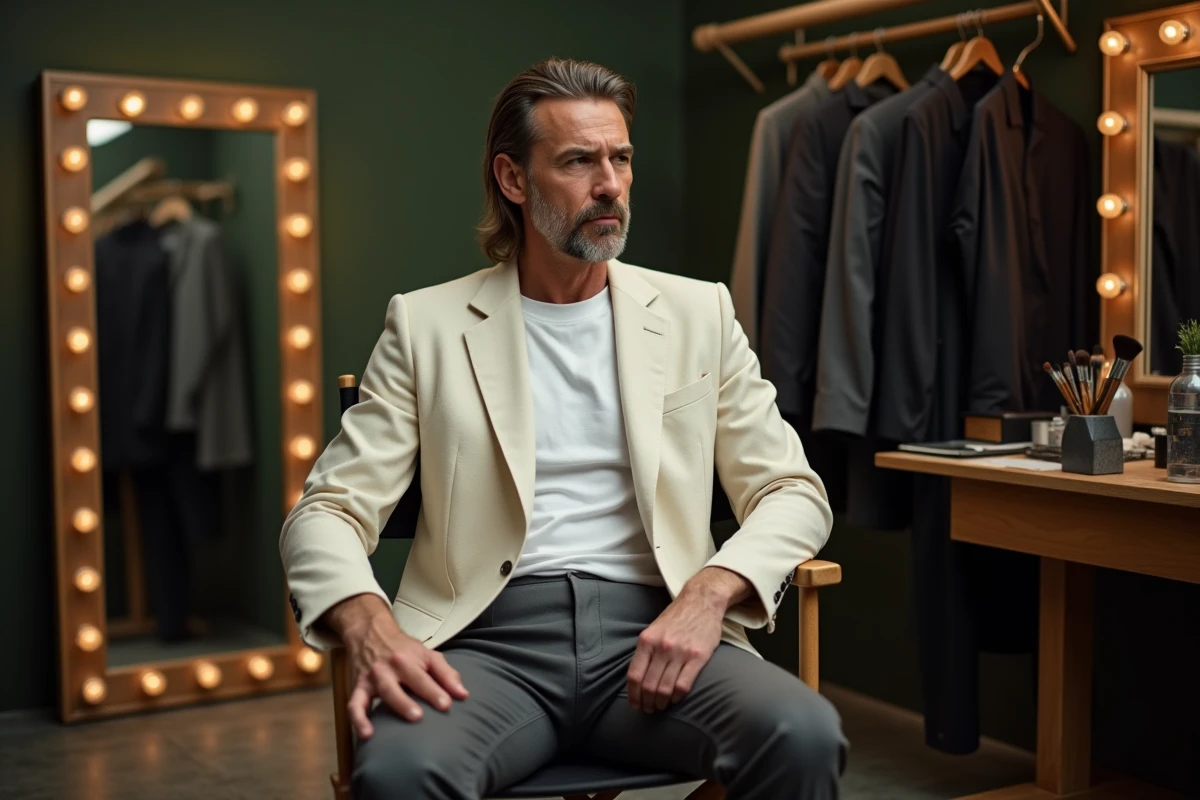
Men’s mullet and K-pop: a faster adoption than in Europe
The “Hair Trends Asia 2026” study by WGSN documents a clear phenomenon: the men’s mullet is gaining popularity in Southeast Asia through K-pop, with significantly faster adoption than in Europe. Korean artists wear the mullet in tapered versions, often paired with colored strands or volume styled at the top of the head.
What changes compared to the classic Western mullet is the proportion. The K-pop mullet maintains a longer and structured top, sometimes styled back, with a nape that barely exceeds the shoulders. This is far from the 1980s mullet that fell between the shoulder blades.
For urban youth in Southeast Asia, this haircut serves as a marker of cultural belonging as much as an aesthetic choice. Classic Western influences (rock, country) take a back seat to that of Korean idols.
Three figures who have truly changed the perception of the men’s mullet
Rather than a long list of names, let’s focus on three profiles whose impact on men’s hairstyling remains measurable.
David Bowie and the mullet as a stage tool
Bowie never wore the mullet by default. His version, popularized with the character Ziggy Stardust, combined a short cut on top, volume, and a long nape often dyed red. The mullet served as a hair costume, not an everyday hairstyle. This approach opened the door to less rigid interpretations of the cut.
Billy Ray Cyrus and the country anchoring
With the success of “Achy Breaky Heart” in the early 1990s, Billy Ray Cyrus permanently associated the mullet with American country culture. His cut, with short sides and generous back length, remains the reference when talking about the “classic” mullet. This model was, in fact, the most reproduced in Europe throughout the decade.
The case of Brad Pitt in the 2000s
Pitt wore a short and deconstructed version of the mullet, closer to a long fade than a true mullet. What matters here is that this softened version made the cut acceptable in professional contexts. The mullet was no longer reserved for the stage or the stadium.
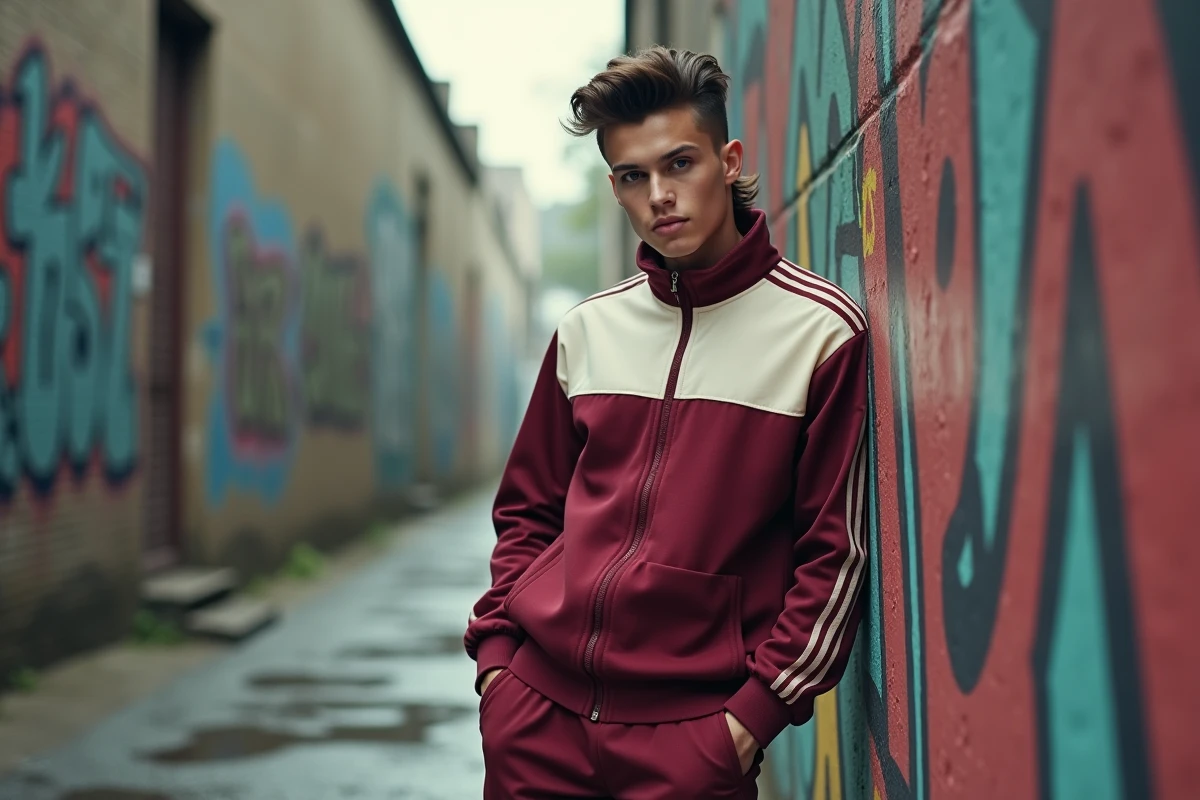
Men’s mullet maintenance: what changes according to texture
It is difficult to provide a single protocol for maintaining a mullet. Here are the concrete variables based on hair type:
- On straight hair, the nape requires a refresh cut every four to six weeks. Without this, the back length loses its shape and gives a neglected rather than structured effect.
- On curly or wavy hair, the back holds its shape better naturally, but the sides grow back faster in volume. The sides need to be trimmed more often than the back.
- On frizzy hair, the mullet-bob works with maintenance focused on hydrating the back length. The twist-out or wash-and-go at the back helps define the shape without breaking the curl.
Feedback varies on this point, but several stylists specializing in afro textures recommend not thinning the back: it is precisely the volume that gives the textured mullet its identity.
European regulations on bleaching products for mullets
One aspect rarely addressed in articles about the mullet haircut concerns the products used for bleached versions. Since January 2026, several Scandinavian countries have initiated a phased ban on strong peroxide-based hair products for layered styles, due to the water discharge associated with these substances. Regulation (EU) 2026/045, published in the Official Journal of the EU on February 12, 2026, governs this restriction.
For men wearing a mullet with bleached strands or highlights, this regulatory evolution changes the game regarding available products in salons. Low peroxide alternatives yield less contrasting results, prompting some stylists to favor plant-based or semi-permanent coloring techniques.
The men’s mullet continues to evolve. Hybrid variants suited to curly and frizzy textures, the K-pop influence reshaping proportions, and regulatory constraints on bleaching redefine this cut far beyond its retro image. Choosing a mullet today is primarily about selecting the version that matches one’s hair texture and lifestyle, not replicating a celebrity photo from the 1980s.