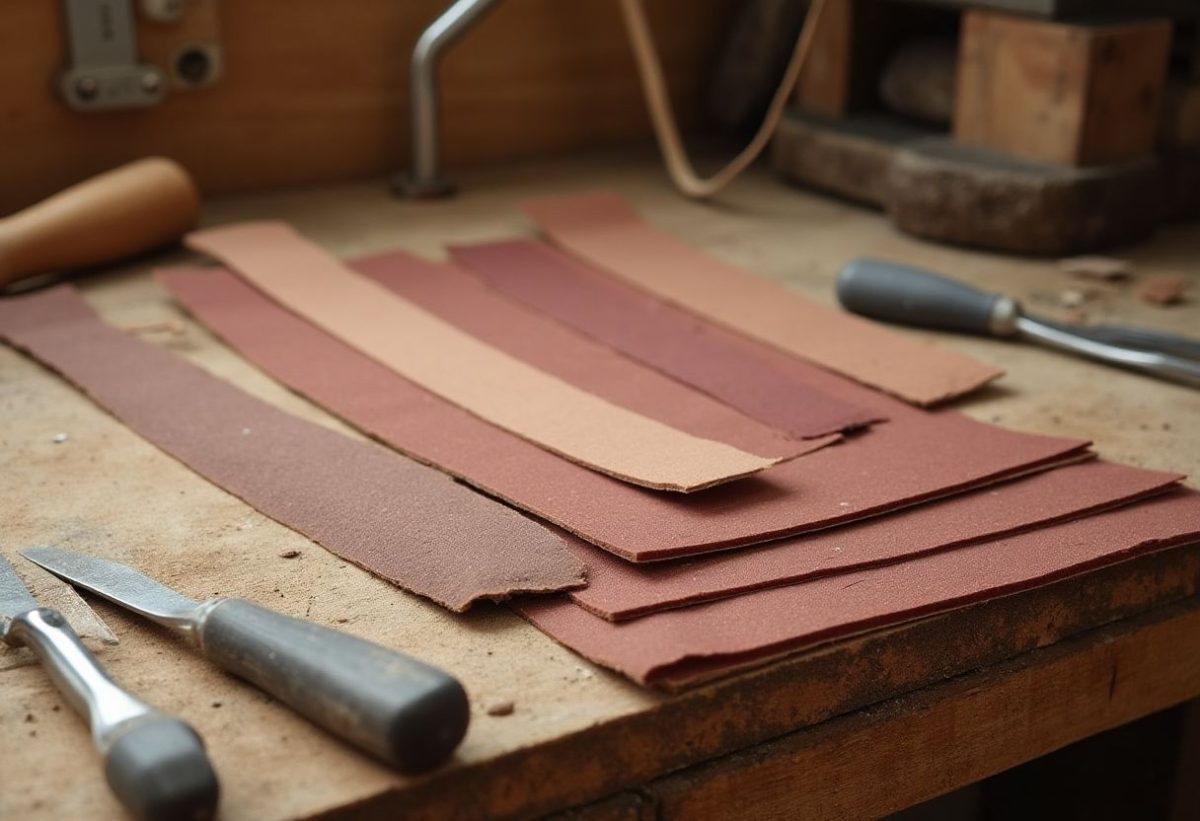
The world of DIY and industry is full of tools whose use is sometimes overlooked, but whose importance is undeniable. Among these tools, the sanding belt stands out for its versatility and effectiveness in working with wood, metal, and other materials. This accessory proves to be a valuable ally for anyone looking to refine, sand, or polish a surface with precision and speed. A tool that, despite its apparent simplicity, hides a universe rich in subtleties and specific techniques. Let’s decode together the mysteries of this essential tool that is the sanding belt.
Origin and evolution of the sanding belt
Since its humble beginnings, the sanding belt has traveled a fascinating path. Its history is marked by a series of innovations and improvements that have contributed to its prominent place in the industrial and artisanal sector.
The birth of this tool dates back to the early 20th century, when the first versions were developed to meet the growing needs of industrialization. Initially, the belts were made of natural materials like sand or glass, glued onto a fabric backing. Quickly, the rise of technologies and modern materials allowed for the emergence of sanding belts made of silicon carbide and aluminum oxide, offering increased durability and efficiency.
The development of more efficient machines also contributed to the transformation of this tool. Today, sanding belts come in a multitude of sizes and grits, each adapted for a specific use, whether for roughing, fine sanding, or polishing.
The different types of sanding belts
The diversity of sanding belts is impressive, reflecting the variety of materials and uses for which they can be employed.
- Aluminum oxide belts: ideal for woodworking, these belts are known for their longevity and effectiveness on soft surfaces.
- Silicon carbide belts: particularly suited for working with hard materials like glass or stone, these belts are prized for their ability to provide a smooth and even finish.
- Ceramic belts: equipped with superior abrasion capacity, they are used for demanding industrial applications, particularly on tough metals.
- Zirconium belts: these belts are commonly used for roughing due to their robustness and high abrasive power.
Choosing the right sanding belt
Selecting the appropriate sanding belt can make all the difference in the outcome of a project. Several essential criteria come into play when making this choice.
The first criterion is the nature of the material to be worked on. For each type of material, there is a specific sanding belt that offers the best results. Next, the choice of grit is crucial. A fine grit is ideal for delicate sanding, while a coarser grit is better suited for removing thick layers of material.
The size and shape of the belt are also critical, as they must match the machine for which they are intended. Finally, working conditions, such as humidity or temperature, can also influence the choice of the sanding belt to optimize its durability and effectiveness.
Optimal use of sanding belts
The effectiveness of the sanding belt relies not only on its selection but also on its use. A few basic techniques and tips can transform a simple sanding session into a high-quality professional job.
Before any use, it is essential to check the condition of the machine and ensure that the belt is properly installed. A good fit guarantees even wear and prevents any risk of damaging the material.
When sanding, adopting consistent pressure is essential to avoid bumps and dips. Regular and controlled movements help maintain a smooth surface. It is recommended to work in a well-lit and clear environment to avoid any lapses in attention that could compromise the quality of the finish.
Finally, preserving the sanding belt is crucial to prolong its lifespan. Regular cleaning after each use, as well as proper storage away from humidity, are simple yet effective gestures to keep the belts in good condition.
The sanding belt is much more than just a sanding tool. It embodies the fusion of modern technology and artisanal know-how. Its ability to transform raw surfaces into polished works of art is unmatched. For professionals and amateurs alike, it remains an indispensable partner, ensuring precision and efficiency in a multitude of projects.